
Click on a word or part of a phrase to learn more.
Scroll through the captions and click  to skip to a caption.
Play video to start
Thank you for joining us.
Thank
you
for
joining
us
I'm glad that we
chose this seating
I'm
glad
that
we
chose
this
seating
arrangement because you're--
how tall are you?
arrangement
because
you're-
how
tall
are
you
Very tall.
Very
tall
Yeah, that's what I thought.
Yeah
that's
what
I
thought
When you came out
at first, I thought,
When
you
came
out
at
first
I
thought
I bet this gentleman can dunk.
I
bet
this
gentleman
can
dunk
All right.
All
right
That's how I said it.
That's
how
I
said
it
How to Win a Trade War.
How
to
Win
a
Trade
War
Boy, this would come
in handy if we found
Boy
this
would
come
in
handy
if
we
found
ourselves in a trade war.
ourselves
in
a
trade
war
Are we in a trade war?
Are
we
in
a
trade
war
Yeah.
Yeah
We are in a trade war?
We
are
in
a
trade
war
With everyone?
With
everyone
Yeah.
Yeah
Whole world?
Whole
world
Are we winning?
Are
we
winning
Oh boy.
Oh
boy
What?
What
How would we know?
How
would
we
know
Oh boy.
Oh
boy
Are we winning against anybody?
Are
we
winning
against
anybody
Is Belgium-- are
we beating Belgium?
Is
Belgium-
are
we
beating
Belgium
So.
So
I feel like
the two doctors try
I
feel
like
the
two
doctors
try
not to break bad news to me.
not
to
break
bad
news
to
me
So we are-- the trade war.
So
we
are-
the
trade
war
Let's be clear.
Let's
be
clear
We launched the trade war.
We
launched
the
trade
war
Correct?
Correct
Yes.
Yes
Liberation day
launched the trade war?
Liberation
day
launched
the
trade
war
Yes.
Yes
You can speak
more than one word.
You
can
speak
more
than
one
word
OK OK.
OK
OK
So yes.
So
yes
So just over a year
ago, Donald Trump
So
just
over
a
year
ago
Donald
Trump
decided to ignore the most
basic military strategy
decided
to
ignore
the
most
basic
military
strategy
and fight a war on all
the fronts at the same time.
and
fight
a
war
on
all
the
fronts
at
the
same
time
He launched a trade
war against everybody.
He
launched
a
trade
war
against
everybody
Everybody everybody.
Everybody
everybody
And yeah, there is a reason
you're not supposed to do that.
And
yeah
there
is
a
reason
you're
not
supposed
to
do
that
Would that be in here?
Would
that
be
in
here
Maybe maybe.
Maybe
maybe
And so stepping back, right?
And
so
stepping
back
right
The problem
in the global economy--
The
problem
in
the
global
economy-
there is a real trade problem
in the global economy,
there
is
a
real
trade
problem
in
the
global
economy
and it's to do with
the relationship with China.
and
it's
to
do
with
the
relationship
with
China
And that is
a significant issue.
And
that
is
a
significant
issue
And what would have been
good is to work with
And
what
would
have
been
good
is
to
work
with
allies because--
allies
because-
I'm sorry, what
was the last part?
I'm
sorry
what
was
the
last
part
Because when you fight
a war on all the fronts,
Because
when
you
fight
a
war
on
all
the
fronts
that means your allies
are also fighting
that
means
your
allies
are
also
fighting
a war on all of the fronts.
a
war
on
all
of
the
fronts
So suddenly, Europe
was going to try
So
suddenly
Europe
was
going
to
try
to deal with
the China issue, but
to
deal
with
the
China
issue
but
now it's having to also
deal with the US issue
now
it's
having
to
also
deal
with
the
US
issue
at the same time.
at
the
same
time
What would
the metrics be of a--
What
would
the
metrics
be
of
a-
so how do we even
judge whether or not--
so
how
do
we
even
judge
whether
or
not-
so we understand
the strategy should
so
we
understand
the
strategy
should
not have been to fire on our
allies as well as our rivals.
not
have
been
to
fire
on
our
allies
as
well
as
our
rivals
What are the metrics
of a trade war?
What
are
the
metrics
of
a
trade
war
How do we judge it?
How
do
we
judge
it
I think the most
important one
I
think
the
most
important
one
is, can you do what you want?
is
can
you
do
what
you
want
Or are you being constrained
by your vulnerabilities to not
Or
are
you
being
constrained
by
your
vulnerabilities
to
not
be able to do what you want?
be
able
to
do
what
you
want
I think that's
the biggest key to show
I
think
that's
the
biggest
key
to
show
how we're losing right now.
how
we're
losing
right
now
When we say, can we do
what we want, we mean,
When
we
say
can
we
do
what
we
want
we
mean
can we sell
our products where we
can
we
sell
our
products
where
we
want to sell them for the price
we would like to sell them at?
want
to
sell
them
for
the
price
we
would
like
to
sell
them
at
That could be part of it.
That
could
be
part
of
it
It could be that we
want to impose policies.
It
could
be
that
we
want
to
impose
policies
Maybe we're worried
about certain countries
Maybe
we're
worried
about
certain
countries
out there that
rhyme with Schmina.
out
there
that
rhyme
with
Schmina
I had a different rhyme
earlier, but yours works, too.
I
had
a
different
rhyme
earlier
but
yours
works
too
And maybe you want to do
things like tariffs or export
And
maybe
you
want
to
do
things
like
tariffs
or
export
restrictions or be a little
tough on certain issues,
restrictions
or
be
a
little
tough
on
certain
issues
but you can't
because you're worried
but
you
can't
because
you're
worried
about them standing
up to you in a way
about
them
standing
up
to
you
in
a
way
that you're really vulnerable.
that
you're
really
vulnerable
And that's where we found
ourselves last year.
And
that's
where
we
found
ourselves
last
year
China has figured out
how to play a trade war,
China
has
figured
out
how
to
play
a
trade
war
how to at least win
a trade war at the moment.
how
to
at
least
win
a
trade
war
at
the
moment
And that's because we're
vulnerable to a lot of things
And
that's
because
we're
vulnerable
to
a
lot
of
things
we need for our economy
to work that, really,
we
need
for
our
economy
to
work
that
really
China is the only one out
there that makes right now.
China
is
the
only
one
out
there
that
makes
right
now
How are we vulnerable?
How
are
we
vulnerable
What is it that China does
that makes us vulnerable?
What
is
it
that
China
does
that
makes
us
vulnerable
They mine, process,
manufacture into magnets
They
mine
process
manufacture
into
magnets
something called rare earths.
something
called
rare
earths
Yes
Yes
So they go into cars
and to defense systems.
So
they
go
into
cars
and
to
defense
systems
Electronics.
Electronics
Electronics.
Electronics
I never thought I would know so
much about rare earths supply
I
never
thought
I
would
know
so
much
about
rare
earths
supply
chains, but here we are.
chains
but
here
we
are
And essentially, China has
been copying what the US
And
essentially
China
has
been
copying
what
the
US
has been doing, I think.
has
been
doing
I
think
Because the US has
been restricting
Because
the
US
has
been
restricting
exports to China for a while.
exports
to
China
for
a
while
And so the Chinese just looked
at what the US was doing
And
so
the
Chinese
just
looked
at
what
the
US
was
doing
and said, OK, we
can do that, too.
and
said
OK
we
can
do
that
too
So we do strategic
restrictions.
So
we
do
strategic
restrictions
And you talk about this in the
book, strategic restrictions
And
you
talk
about
this
in
the
book
strategic
restrictions
on exports, meaning the one
advantage we have is our chips
on
exports
meaning
the
one
advantage
we
have
is
our
chips
are apparently second to none.
are
apparently
second
to
none
We're apparently two to three
months ahead of everybody
We're
apparently
two
to
three
months
ahead
of
everybody
else when it comes to chips.
else
when
it
comes
to
chips
So we restrict that from
going directly to China.
So
we
restrict
that
from
going
directly
to
China
That's our leverage.
That's
our
leverage
And the equipment that
is used to make the chips.
And
the
equipment
that
is
used
to
make
the
chips
But we don't do that.
But
we
don't
do
that
That's done
in Taiwan, is it not?
That's
done
in
Taiwan
is
it
not
So we do some of it.
So
we
do
some
of
it
We also work with allies,
so Japan and the Netherlands.
We
also
work
with
allies
so
Japan
and
the
Netherlands
The Netherlands actually
does the fanciest pieces
The
Netherlands
actually
does
the
fanciest
pieces
of these equipment.
of
these
equipment
We work with their government
to say, hey, let's
We
work
with
their
government
to
say
hey
let's
not send that stuff to China.
not
send
that
stuff
to
China
What is it?
What
is
it
Is that the part where
they frost the thing?
Is
that
the
part
where
they
frost
the
thing
Yeah yeah.
Yeah
yeah
You stick your finger in it.
You
stick
your
finger
in
it
Yeah, that works.
Yeah
that
works
Exactly yeah.
Exactly
yeah
Nice.
Nice
But yeah, so we have been
doing that kind of thing,
But
yeah
so
we
have
been
doing
that
kind
of
thing
but for military purposes.
but
for
military
purposes
We're really worried
about China getting
We're
really
worried
about
China
getting
hold of these super fancy
chips because it would enhance
hold
of
these
super
fancy
chips
because
it
would
enhance
their military
capabilities, and
their
military
capabilities
and
that's why we didn't
want to send it to them.
that's
why
we
didn't
want
to
send
it
to
them
China is doing something that's
very different-- not sending
China
is
doing
something
that's
very
different-
not
sending
us these rare earths is--
us
these
rare
earths
is-
But they did
that in response.
But
they
did
that
in
response
Yes, they did it in response.
Yes
they
did
it
in
response
They were not doing
it prior to this.
They
were
not
doing
it
prior
to
this
Well, they have
done it in the past.
Well
they
have
done
it
in
the
past
They did this back,
actually, in 2010
They
did
this
back
actually
in
2010
when they got mad at Japan
for something at the time.
when
they
got
mad
at
Japan
for
something
at
the
time
But didn't Japan
at that point
But
didn't
Japan
at
that
point
get themselves a backlog,
a stockpile of rare earths
get
themselves
a
backlog
a
stockpile
of
rare
earths
in preparation
for this type of thing?
in
preparation
for
this
type
of
thing
Did we do that before
launching this trade war?
Did
we
do
that
before
launching
this
trade
war
Son of a-- is that in the book?
Son
of
a-
is
that
in
the
book
Yeah, Japan got hit
early, and they prepared.
Yeah
Japan
got
hit
early
and
they
prepared
And so they acted
in a very extreme way
And
so
they
acted
in
a
very
extreme
way
to reduce
their reliance on China.
to
reduce
their
reliance
on
China
They were ahead of the game.
They
were
ahead
of
the
game
And then when China did it
to everyone else last year,
And
then
when
China
did
it
to
everyone
else
last
year
everyone else was looking
to Japan to say, oh,
everyone
else
was
looking
to
Japan
to
say
oh
well, why didn't we do that?
well
why
didn't
we
do
that
So you're saying,
if I may paraphrase,
So
you're
saying
if
I
may
paraphrase
we launched a trade war
rashly, too broadly,
we
launched
a
trade
war
rashly
too
broadly
without proper
preparation and now
without
proper
preparation
and
now
find ourselves
mired in an event
find
ourselves
mired
in
an
event
that we are are now losing.
that
we
are
are
now
losing
This is just
so out of character
This
is
just
so
out
of
character
for this administration that I
don't know what got into them.
for
this
administration
that
I
don't
know
what
got
into
them
It's almost like trade
wars are like real wars.
It's
almost
like
trade
wars
are
like
real
wars
Logistics win real wars.
Logistics
win
real
wars
You need to--
You
need
to-
Well, thank God we haven't
launched one of those.
Well
thank
God
we
haven't
launched
one
of
those
Let me ask you a question.
Let
me
ask
you
a
question
When you talk about it
as being like a real war,
When
you
talk
about
it
as
being
like
a
real
war
do they wargame--
do
they
wargame-
I understand that they would
say, like, if you attack Iran,
I
understand
that
they
would
say
like
if
you
attack
Iran
we wargame it.
we
wargame
it
And most times, they close
the Strait of Hormuz,
And
most
times
they
close
the
Strait
of
Hormuz
and that's known.
and
that's
known
Do they wargame trade wars?
Do
they
wargame
trade
wars
Who's they?
Who's
they
The Illuminati?
The
Illuminati
I don't know.
I
don't
know
You're the economist.
You're
the
economist
Yes, so some governments
absolutely are doing this.
Yes
so
some
governments
absolutely
are
doing
this
And so I think--
- They plan it.
And
so
I
think-
They
plan
it
They plan it.
They
plan
it
What might happen?
What
might
happen
And not all
of it's just the fear
And
not
all
of
it's
just
the
fear
of trade war and real wars.
of
trade
war
and
real
wars
I think we learned
a lot of lessons
I
think
we
learned
a
lot
of
lessons
during the pandemic, when
we ran short of products,
during
the
pandemic
when
we
ran
short
of
products
and we suddenly became
very worried about supply
and
we
suddenly
became
very
worried
about
supply
chain vulnerabilities.
chain
vulnerabilities
We couldn't get access
to toilet paper initially,
We
couldn't
get
access
to
toilet
paper
initially
but then it became things
like semiconductors.
but
then
it
became
things
like
semiconductors
And all of a sudden,
governments
And
all
of
a
sudden
governments
all around the world
started to look
all
around
the
world
started
to
look
more closely at where
they were getting some
more
closely
at
where
they
were
getting
some
of these essential goods from.
of
these
essential
goods
from
And they did really
sophisticated data
And
they
did
really
sophisticated
data
analytic exercises
to try to figure it out.
analytic
exercises
to
try
to
figure
it
out
And then many of them have
done wargaming exercises
And
then
many
of
them
have
done
wargaming
exercises
to try to figure out
how to minimize a lot
to
try
to
figure
out
how
to
minimize
a
lot
of those vulnerabilities.
of
those
vulnerabilities
I'm not so sure that
was the approach
I'm
not
so
sure
that
was
the
approach
that this administration took
when they came in last January.
that
this
administration
took
when
they
came
in
last
January
You're not so sure?
You're
not
so
sure
So the idea,
though, is a country
So
the
idea
though
is
a
country
is looking to assess
its vulnerabilities,
is
looking
to
assess
its
vulnerabilities
assess its strengths, and shore
up those vulnerabilities
assess
its
strengths
and
shore
up
those
vulnerabilities
to create resilience.
to
create
resilience
Now, what we've been
told is the reason
Now
what
we've
been
told
is
the
reason
we launched this trade
war is to reverse
we
launched
this
trade
war
is
to
reverse
the years of hollowing
out manufacturing,
the
years
of
hollowing
out
manufacturing
but that sounds
backwards to me.
but
that
sounds
backwards
to
me
Wouldn't you use
other methodologies
Wouldn't
you
use
other
methodologies
to increase manufacturing
before launching
to
increase
manufacturing
before
launching
a trade war so that you would
be more resilient in that war?
a
trade
war
so
that
you
would
be
more
resilient
in
that
war
Yeah, it's a good point.
Yeah
it's
a
good
point
So more positively, I
think you have a future
So
more
positively
I
think
you
have
a
future
ahead of you in policy.
ahead
of
you
in
policy
In trade wars.
In
trade
wars
I can launch a trade war.
I
can
launch
a
trade
war
Let me ask you this.
Let
me
ask
you
this
So we talk about
this, and it's very
So
we
talk
about
this
and
it's
very
interesting because the analogy
is launching a real war.
interesting
because
the
analogy
is
launching
a
real
war
And we talk about this really
as a form of nationalism.
And
we
talk
about
this
really
as
a
form
of
nationalism
Where do corporations
fit into the playing
Where
do
corporations
fit
into
the
playing
field in trade wars?
field
in
trade
wars
Because we're talking,
you're going after China,
Because
we're
talking
you're
going
after
China
you're going after
the Netherlands,
you're
going
after
the
Netherlands
you're going after the EU.
you're
going
after
the
EU
Multinational corporations
have no allegiance.
Multinational
corporations
have
no
allegiance
Who are they in all this?
Who
are
they
in
all
this
So I think multinationals are
the soldiers in the trade war.
So
I
think
multinationals
are
the
soldiers
in
the
trade
war
The governments
make the policy.
The
governments
make
the
policy
They're the commanders, and
then the companies are the ones
They're
the
commanders
and
then
the
companies
are
the
ones
actually implementing it.
actually
implementing
it
And so if we think back
to those vulnerabilities,
And
so
if
we
think
back
to
those
vulnerabilities
ultimately, those are
the product of companies
ultimately
those
are
the
product
of
companies
responding to incentives.
responding
to
incentives
For years, it was cheap,
it was efficient to buy
For
years
it
was
cheap
it
was
efficient
to
buy
your components from China.
your
components
from
China
That was where all
the other manufacturing was.
That
was
where
all
the
other
manufacturing
was
And policymakers
encouraged them.
And
policymakers
encouraged
them
And now, what we're
seeing is the result
And
now
what
we're
seeing
is
the
result
of those companies responding
to those incentives and saying,
of
those
companies
responding
to
those
incentives
and
saying
oh wait what?
oh
wait
what
The Chinese can
suddenly cut us off?
The
Chinese
can
suddenly
cut
us
off
It's also US car companies
that are sourcing, from China,
It's
also
US
car
companies
that
are
sourcing
from
China
all those rare earths.
all
those
rare
earths
Are we in a position--
because you
Are
we
in
a
position-
because
you
said that they're
the soldiers in our war.
said
that
they're
the
soldiers
in
our
war
It almost appears to me
that they're actually
It
almost
appears
to
me
that
they're
actually
the soldiers that
started the war,
the
soldiers
that
started
the
war
because globalization
and the introduction of China
because
globalization
and
the
introduction
of
China
into the WTO and all that--
into
the
WTO
and
all
that-
capital travels,
but labor can't.
capital
travels
but
labor
can't
So when these companies, which
are built in Silicon Valley
So
when
these
companies
which
are
built
in
Silicon
Valley
or wherever it is,
using the infrastructure
or
wherever
it
is
using
the
infrastructure
of the United States--
of
the
United
States-
Silicon Valley doesn't
exist without taxpayer
Silicon
Valley
doesn't
exist
without
taxpayer
funding and government
resources, any of those things.
funding
and
government
resources
any
of
those
things
We built them.
We
built
them
And then they could just
go, [BLEEP] these guys.
And
then
they
could
just
go
BLEEP
these
guys
We're going to where we
don't have to pay our workers
We're
going
to
where
we
don't
have
to
pay
our
workers
anything, and we get
to do everything,
anything
and
we
get
to
do
everything
and we can hollow out the very
country that made us possible.
and
we
can
hollow
out
the
very
country
that
made
us
possible
And now we've got
to fight a trade
And
now
we've
got
to
fight
a
trade
war to beg them to come back?
war
to
beg
them
to
come
back
China would never put up
with that, would they?
China
would
never
put
up
with
that
would
they
No.
No
[LAUGHTER]
LAUGHTER
Not to go
into Jeremiah, but I
Not
to
go
into
Jeremiah
but
I
don't understand
how they're allowed
don't
understand
how
they're
allowed
to get us into this mess,
and then we've got to figure
to
get
us
into
this
mess
and
then
we've
got
to
figure
out a way to get out of it.
out
a
way
to
get
out
of
it
So there's a couple
things there.
So
there's
a
couple
things
there
One, I think China has very
different relationships
One
I
think
China
has
very
different
relationships
with its companies than we do.
with
its
companies
than
we
do
And I think one of the--
And
I
think
one
of
the-
agree.
agree
The way we should think
about companies these days
The
way
we
should
think
about
companies
these
days
is they're really not
American companies.
is
they're
really
not
American
companies
They're multinationals.
They're
multinationals
They're themselves.
They're
themselves
They're their own entities,
and we can't expect them,
They're
their
own
entities
and
we
can't
expect
them
as Soumaya put it, to fight
our battles for us, unless you
as
Soumaya
put
it
to
fight
our
battles
for
us
unless
you
incentivize them to, unless you
create the right regulations
incentivize
them
to
unless
you
create
the
right
regulations
to force them to behave
in certain ways,
to
force
them
to
behave
in
certain
ways
they're just gonna act
in their own interests.
they're
just
gonna
act
in
their
own
interests
And if that means going
where workers are cheaper,
And
if
that
means
going
where
workers
are
cheaper
that's what they're gonna
do, and that's where
that's
what
they're
gonna
do
and
that's
where
they're gonna make things.
they're
gonna
make
things
Now, there are some benefits
to that though, too, right?
Now
there
are
some
benefits
to
that
though
too
right
We actually do get, through
international trade,
We
actually
do
get
through
international
trade
access to much cheaper products
than we would otherwise.
access
to
much
cheaper
products
than
we
would
otherwise
And I think we've seen
today, with inflation,
And
I
think
we've
seen
today
with
inflation
people like it when
prices are lower
people
like
it
when
prices
are
lower
than when prices are higher.
than
when
prices
are
higher
So there are lots of benefits
from trade that we don't
So
there
are
lots
of
benefits
from
trade
that
we
don't
completely want to eliminate.
completely
want
to
eliminate
But I think we do need
to recognize that that
But
I
think
we
do
need
to
recognize
that
that
does sometimes come
with costs, and
does
sometimes
come
with
costs
and
especially costs for workers.
especially
costs
for
workers
And that has to be something
that's dealt with as well.
And
that
has
to
be
something
that's
dealt
with
as
well
Why, then, are
governments incentivized
Why
then
are
governments
incentivized
to always ways lubricate
the way for corporations
to
always
ways
lubricate
the
way
for
corporations
but not workers?
but
not
workers
Why are workers just always
the inevitable victims
Why
are
workers
just
always
the
inevitable
victims
of all of these shenanigans?
of
all
of
these
shenanigans
It's hard to understand
that the government
It's
hard
to
understand
that
the
government
wouldn't put some limitations.
wouldn't
put
some
limitations
If you want access
to our infrastructure,
If
you
want
access
to
our
infrastructure
you can't just screw over our
workers because it's easier.
you
can't
just
screw
over
our
workers
because
it's
easier
Yeah.
Yeah
[LAUGHTER]
LAUGHTER
Part of it, I think,
is the political process.
Part
of
it
I
think
is
the
political
process
In Washington, it's much
easier for the big companies
In
Washington
it's
much
easier
for
the
big
companies
to organize and lobby and get
the policies that they want,
to
organize
and
lobby
and
get
the
policies
that
they
want
and it's much more
difficult for workers
and
it's
much
more
difficult
for
workers
to do the same thing.
to
do
the
same
thing
JON STEWART: So they're
not soldiers.
JON
STEWART:
So
they're
not
soldiers
They're mercenaries.
They're
mercenaries
They're Blackwater.
They're
Blackwater
They're not soldiers,
because soldiers
They're
not
soldiers
because
soldiers
take an oath to the nation that
birthed them, and they don't.
take
an
oath
to
the
nation
that
birthed
them
and
they
don't
So how, in a trade war--
So
how
in
a
trade
war-
because how does it
figure in, in a trade war,
because
how
does
it
figure
in
in
a
trade
war
that we can come
to a better understanding
that
we
can
come
to
a
better
understanding
with these corporations of what
our expectations are for them.
with
these
corporations
of
what
our
expectations
are
for
them
So I think what
the Trump administration
So
I
think
what
the
Trump
administration
is trying to do is, it's trying
to reset that bargain, right?
is
trying
to
do
is
it's
trying
to
reset
that
bargain
right
So it's saying, if you
want to serve US customers,
So
it's
saying
if
you
want
to
serve
US
customers
then you've got
to operate in the US.
then
you've
got
to
operate
in
the
US
And it's trying to do
that with its trade tools.
And
it's
trying
to
do
that
with
its
trade
tools
And I think
the tricky reality is
And
I
think
the
tricky
reality
is
that it's extremely hard to
force these mercenary companies
that
it's
extremely
hard
to
force
these
mercenary
companies
to do that.
to
do
that
And so the risk is that you end
up essentially taxing imports,
And
so
the
risk
is
that
you
end
up
essentially
taxing
imports
so you put up tariffs, you
make it harder for companies
so
you
put
up
tariffs
you
make
it
harder
for
companies
to get stuff from overseas.
to
get
stuff
from
overseas
And what those companies
do is, they don't reshore.
And
what
those
companies
do
is
they
don't
reshore
They just do less
of everything.
They
just
do
less
of
everything
It can be really, really--
It
can
be
really
really-
the problem that you
identify is real.
the
problem
that
you
identify
is
real
The challenge is
getting that trade war
The
challenge
is
getting
that
trade
war
then to solve that problem.
then
to
solve
that
problem
That link isn't--
That
link
isn't-
Well yeah.
Well
yeah
No, that's exactly it.
No
that's
exactly
it
Because it seems
to me that, well,
Because
it
seems
to
me
that
well
now we're going after
China and the EU,
now
we're
going
after
China
and
the
EU
but we're still not
addressing the elephant
but
we're
still
not
addressing
the
elephant
in the room, which is these
free agent mercenaries.
in
the
room
which
is
these
free
agent
mercenaries
So let me ask you this,
if this is reasonable.
So
let
me
ask
you
this
if
this
is
reasonable
There's a lot of times that
someone might say, all right,
There's
a
lot
of
times
that
someone
might
say
all
right
we'll pay
for your college, but you
we'll
pay
for
your
college
but
you
have to give us four
years of service
have
to
give
us
four
years
of
service
as a teacher in these
certain districts.
as
a
teacher
in
these
certain
districts
It's a way for us
to get the people
It's
a
way
for
us
to
get
the
people
that we need, to give
them something,
that
we
need
to
give
them
something
but to expect
something in return.
but
to
expect
something
in
return
Is that the type
of arrangement that
Is
that
the
type
of
arrangement
that
can be done for the tax
money and infrastructure
can
be
done
for
the
tax
money
and
infrastructure
that we use to build
these companies?
that
we
use
to
build
these
companies
Yeah.
Yeah
I was just gonna
say, there are things
I
was
just
gonna
say
there
are
things
that I think we can do to treat
corporations differently,
that
I
think
we
can
do
to
treat
corporations
differently
but it's not through
tariffs, right?
but
it's
not
through
tariffs
right
So I think--
So
I
think-
JON STEWART: Not
through trade wars.
JON
STEWART:
Not
through
trade
wars
Not through trade wars.
Not
through
trade
wars
JON STEWART: This is
not a good way to do it.
JON
STEWART:
This
is
not
a
good
way
to
do
it
No.
No
I mean, there's been efforts
over the last 10 years
I
mean
there's
been
efforts
over
the
last
10
years
to try to get global
corporations to not
to
try
to
get
global
corporations
to
not
be tax evaders, to not go
to tax haven countries,
be
tax
evaders
to
not
go
to
tax
haven
countries
to have them pay minimum
taxes somewhere in the world.
to
have
them
pay
minimum
taxes
somewhere
in
the
world
I think that's a more
effective strategy,
I
think
that's
a
more
effective
strategy
trying to get these
companies to behave and
trying
to
get
these
companies
to
behave
and
be better global
corporate citizens
be
better
global
corporate
citizens
than just whacking
them with tariffs.
than
just
whacking
them
with
tariffs
Because with tariffs
come all the bad things.
Because
with
tariffs
come
all
the
bad
things
Best-case scenario,
maybe they do
Best-case
scenario
maybe
they
do
bring some of that production
back to The United States.
bring
some
of
that
production
back
to
The
United
States
We get more manufacturing here.
We
get
more
manufacturing
here
But because we've made it
so expensive because of tariffs
But
because
we've
made
it
so
expensive
because
of
tariffs
for them to do so, they
can't hire any workers,
for
them
to
do
so
they
can't
hire
any
workers
and they just have to do
it all with robots.
and
they
just
have
to
do
it
all
with
robots
And at the end
of the day, how does that
And
at
the
end
of
the
day
how
does
that
really help us,
if we're really worried
really
help
us
if
we're
really
worried
about the American worker?
about
the
American
worker
You bring something
up in the book
You
bring
something
up
in
the
book
that I thought was
really interesting
that
I
thought
was
really
interesting
about wage insurance.
about
wage
insurance
Because my concern
is that there
Because
my
concern
is
that
there
are casualties in trade wars
that are the multinationals.
are
casualties
in
trade
wars
that
are
the
multinationals
He's cutting deals
with Apple and Intel
He's
cutting
deals
with
Apple
and
Intel
and NVIDIA and all
these big players,
and
NVIDIA
and
all
these
big
players
but the people
that are suffering
but
the
people
that
are
suffering
are the small businesses
in America, the people that
are
the
small
businesses
in
America
the
people
that
don't like uncertainty
and can't adjust their business
don't
like
uncertainty
and
can't
adjust
their
business
practices to all these
fluctuating tariffs and all
practices
to
all
these
fluctuating
tariffs
and
all
these other changing things.
these
other
changing
things
But there's a program
you mentioned called
But
there's
a
program
you
mentioned
called
wage insurance, and it's
generally done--
wage
insurance
and
it's
generally
done-
and correct me if I'm wrong.
and
correct
me
if
I'm
wrong
If you lose a job
in manufacturing
If
you
lose
a
job
in
manufacturing
because it was globalized
and you get another job that
because
it
was
globalized
and
you
get
another
job
that
isn't paying as well,
the government provides you
isn't
paying
as
well
the
government
provides
you
the money up to that level.
the
money
up
to
that
level
Is that correct?
Is
that
correct
Yeah.
Yeah
I think it's a certain share
of the difference, basically.
I
think
it's
a
certain
share
of
the
difference
basically
So they're
cushioning that blow.
So
they're
cushioning
that
blow
So you if you've
just lost your job,
So
you
if
you've
just
lost
your
job
that means that
you have some help.
that
means
that
you
have
some
help
You've got a cushion, and
so your income doesn't fall.
You've
got
a
cushion
and
so
your
income
doesn't
fall
You're also encouraged
to get a new job.
You're
also
encouraged
to
get
a
new
job
Maybe you switch
to a new industry,
Maybe
you
switch
to
a
new
industry
something that isn't
so vulnerable toward
something
that
isn't
so
vulnerable
toward
those globalization forces.
those
globalization
forces
And the evidence that we have
suggests that it actually
And
the
evidence
that
we
have
suggests
that
it
actually
can pay for itself,
which is kind of never
can
pay
for
itself
which
is
kind
of
never
heard of in economic policies.
heard
of
in
economic
policies
So I think over the last
couple of decades,
So
I
think
over
the
last
couple
of
decades
economists have really
beaten themselves
economists
have
really
beaten
themselves
up about helping
the people who are
up
about
helping
the
people
who
are
left behind by globalization.
left
behind
by
globalization
And because trade tools are
so bad at helping the worker,
And
because
trade
tools
are
so
bad
at
helping
the
worker
really, what you
need is better worker
really
what
you
need
is
better
worker
protections,
including potentially
protections
including
potentially
programs like that one.
programs
like
that
one
JON STEWART: Right.
JON
STEWART:
Right
So let me ask you a question,
which brings up the point,
So
let
me
ask
you
a
question
which
brings
up
the
point
what if we use that
preemptively in our war?
what
if
we
use
that
preemptively
in
our
war
So rather than wage
insurance to help people
So
rather
than
wage
insurance
to
help
people
in areas that have been
hollowed out by globalization,
in
areas
that
have
been
hollowed
out
by
globalization
use wage insurance to go
to those companies who
use
wage
insurance
to
go
to
those
companies
who
were going to go
overseas and say,
were
going
to
go
overseas
and
say
we will make up at least
most of the difference
we
will
make
up
at
least
most
of
the
difference
between what you would
pay your workers in China
between
what
you
would
pay
your
workers
in
China
and what you would
pay them in Kentucky?
and
what
you
would
pay
them
in
Kentucky
And we do that preemptively,
so those communities never
And
we
do
that
preemptively
so
those
communities
never
get hollowed out
in the first place.
get
hollowed
out
in
the
first
place
Could that be part of an
industry and industrial policy
Could
that
be
part
of
an
industry
and
industrial
policy
that actually-- rather
than how to win a trade
that
actually-
rather
than
how
to
win
a
trade
war, a book on the next
book, the sequel,
war
a
book
on
the
next
book
the
sequel
how to survive
a trade war, would
how
to
survive
a
trade
war
would
that be a possible solution?
that
be
a
possible
solution
100%.
100
There's there's
so much more that we
There's
there's
so
much
more
that
we
can do in terms of adjusting
the tax code to make it more
can
do
in
terms
of
adjusting
the
tax
code
to
make
it
more
beneficial for companies
to hire workers and not
beneficial
for
companies
to
hire
workers
and
not
have to pay sort
of extraordinary taxes
have
to
pay
sort
of
extraordinary
taxes
and other burdens
and things like that.
and
other
burdens
and
things
like
that
And I think that's really what
the emphasis should be on.
And
I
think
that's
really
what
the
emphasis
should
be
on
How does this wind down?
How
does
this
wind
down
How do we find
our way out of this?
How
do
we
find
our
way
out
of
this
Do you have an idea?
Do
you
have
an
idea
Have you seen this
play out before?
Have
you
seen
this
play
out
before
[SIGHS] So--
SIGHS
So-
There's a lot
of spying going on now.
There's
a
lot
of
spying
going
on
now
Yeah yeah.
Yeah
yeah
Well, I've got a confession.
Well
I've
got
a
confession
So it's an optimistic guide.
So
it's
an
optimistic
guide
And you know--
And
you
know-
What?
What
Well, we go through some
scenarios for how we could
Well
we
go
through
some
scenarios
for
how
we
could
get ourselves out of this.
get
ourselves
out
of
this
And my confession is that a lot
of the happy, sunlit uplands
And
my
confession
is
that
a
lot
of
the
happy
sunlit
uplands
are quite a long
way in the future.
are
quite
a
long
way
in
the
future
JON STEWART: There's
a lot of 2050 in this.
JON
STEWART:
There's
a
lot
of
2050
in
this
Yeah, there's a lot of 2050.
Yeah
there's
a
lot
of
2050
And so right now, I
think we're a bit worried
And
so
right
now
I
think
we're
a
bit
worried
that things are
gonna have to get
that
things
are
gonna
have
to
get
worse before they get better.
worse
before
they
get
better
But eventually, it really
should be possible for us
But
eventually
it
really
should
be
possible
for
us
all to come together
and stop brandishing
all
to
come
together
and
stop
brandishing
all these trade weapons.
all
these
trade
weapons
Look, this is optimistic.
Look
this
is
optimistic
No, this is very-- yeah
No
this
is
very-
yeah
Yeah.
Yeah
Eventually, we should be
able to get together and
Eventually
we
should
be
able
to
get
together
and
do something that's
mutually beneficial,
do
something
that's
mutually
beneficial
so we can escape the chaos.
so
we
can
escape
the
chaos
JON STEWART: Chad?
JON
STEWART:
Chad
This is not going away.
This
is
not
going
away
[LAUGHS]
LAUGHS
You were just talking--
You
were
just
talking-
Have you guys talked
to each other about this?
Have
you
guys
talked
to
each
other
about
this
Yeah.
Yeah
I'm the optimistic one
in the book, actually.
I'm
the
optimistic
one
in
the
book
actually
She's the pessimist.
She's
the
pessimist
No, the issue is
not going away.
No
the
issue
is
not
going
away
You just gave all this great
advice to graduates, right?
You
just
gave
all
this
great
advice
to
graduates
right
Saddle up.
Saddle
up
[LAUGHS] Fantastic!
LAUGHS
Fantastic
Thank you both very
much for coming by.
Thank
you
both
very
much
for
coming
by
How to Win a Trade War, May 26.
How
to
Win
a
Trade
War
May
26
Available for pre-order.
Available
for
pre-order
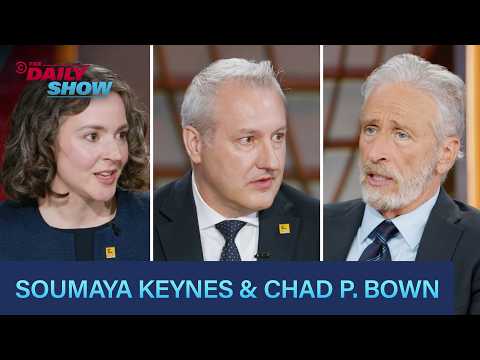
Soumaya Keynes and Chad Bown.
Soumaya
Keynes
and
Chad
Bown
- Pause
0.5x - Slower
0.75x - Slow
1.0x - Normal
Your daily language practice
Click ?
for definitions and explanations
Click
to start from the beginning
Click
to go back to the previous caption
Click
to change the talking speed
Tip of the day
Just a few minutes daily adds up to massive progress over time.
Keep going - you're doing great!
These features are available only to paying subscribers

Slow the playback rate.
Sometimes native speakers talk very quickly. Catch every word by reducing the speed of the video.

Your own teacher.
If you are unsure of any word or phrase then the AI assistant can help you understand.
You might also like these videos





If you enjoy using our custom video player, why not join thousands of subscribers who have signed up to our free weekly lessons?